Product designer crafting consumer tools that turn complex goals into structured, actionable workflows.
Selected work,
UX,
Visual
Complex System / Creative Tool /
Workflow Design
2025
Product
An AI-powered tool that turns goals into step-by-step actions while keeping the process transparent and controllable
My Role
Led the project end-to-end, from early user research and prototyping to refined, production-level design details.
Defined the system architecture while designing interactions and workflows that align with real-world team practices.
Outcome
Reimagined layer navigation as a spatial system
Reduced cognitive load in complex design files
Introduced a new mental model: layers as depth, not hierarchy
Problem
As design files grow, layer panels become overwhelming.
Deep nesting makes navigation slow
Relationships between elements are hard to see
Designers rely on trial-and-error to locate objects
Current tools treat layers as lists, but designers think in space.
Core Experience
Layer as Depth
Direct Navigation
Visual Querying
Layer as Depth
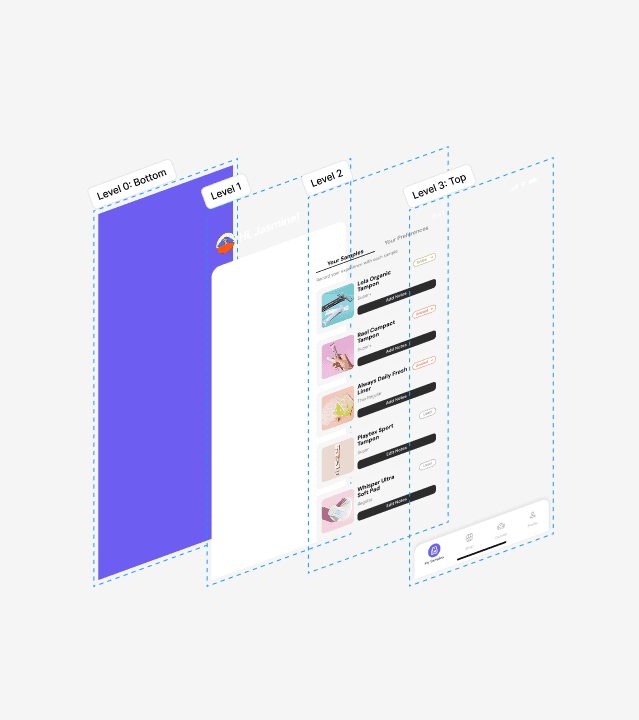
LayerLens transforms layers into a 3D spatial view:
Each layer exists in depth
Hierarchies become visual stacks
Relationships are immediately visible
Direct Navigation
Instead of scanning lists, users:
Click directly into layers
Move through depth
Focus on specific regions
Visual Querying
Users can visually locate elements instead of searching names. Navigation becomes perceptual, not textual.
System Design
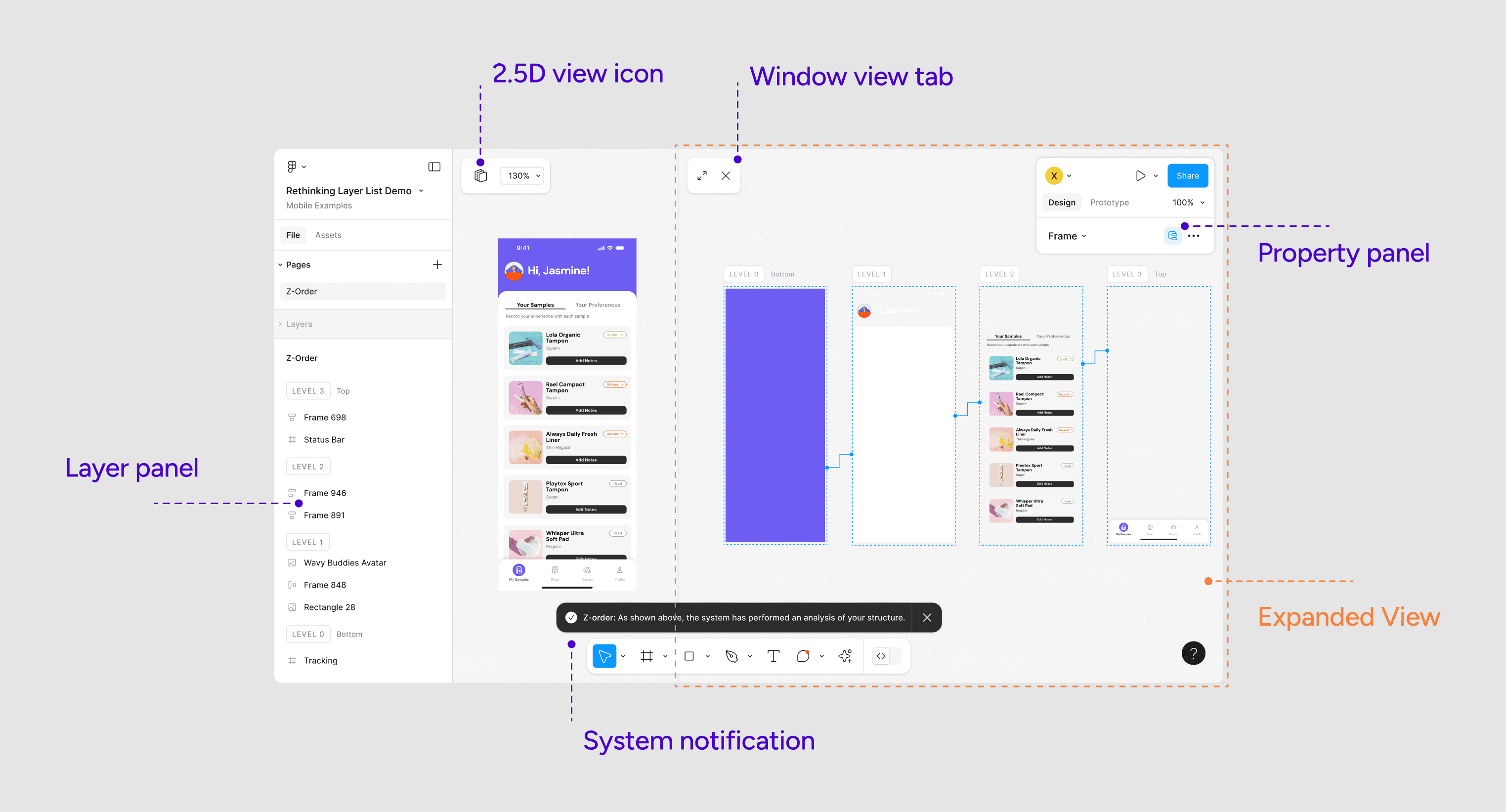
LayerLens is not just a feature. It introduces a new interaction model:
From hierarchy → to spatial structure
From searching → to seeing
From lists → to environments
Design Exploration
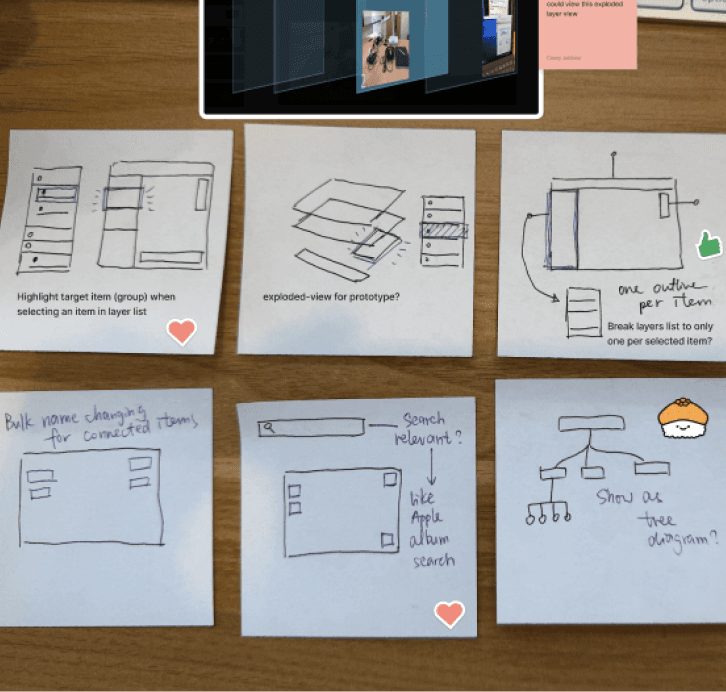
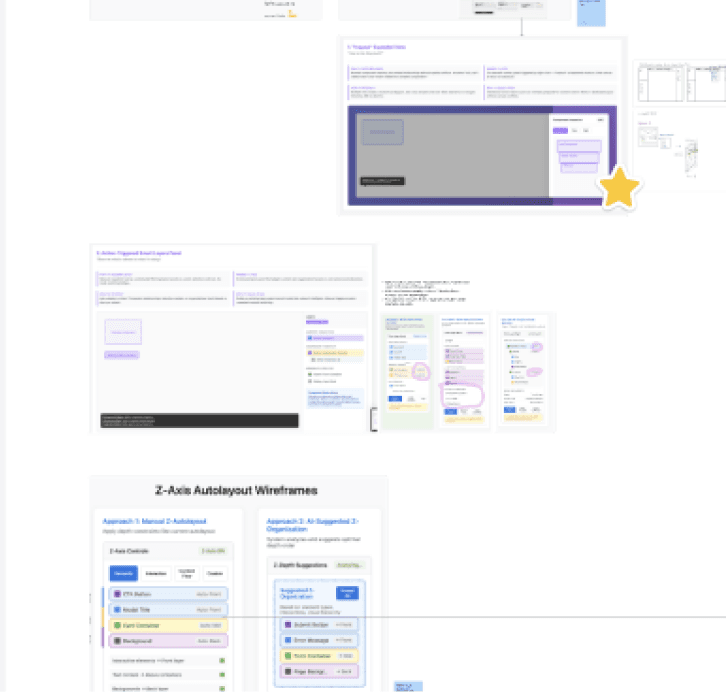
Tested multiple depth representations
Balanced clarity vs visual noise
Designed interactions for entering and exiting layers
Reflection
LayerLens explores how interfaces can better match human perception.
When tools align with how we think, complexity becomes navigable.
This project reflects my interest in:
creative tools
spatial interaction
system-level design