SaaS
Mobile
Productivity Tool
2026
Stride helps multi-passionate users capture unlimited ideas, organize them into active priorities, and turn selected interests into manageable next steps, reducing the anxiety and cognitive load of deciding what to pursue.
Overview
The Problem
Curious, multi-passionate people now live in a world where the internet makes learning anything feel possible, while modern careers reward people with a unique direction.
But when every field feels connected and every path feels valuable, limited time and energy make it hard to decide where to start, and turn broad curiosity into meaningful outcomes.
My Role
Led the product from 0→1 as the sole designer, owning discovery, product framing, UX/UI design, and prototyping.
Built AI-assisted functional prototypes to explore product behavior, test interaction logic, and validate the experience with users.
Translated research insights into user flows, wireframes, interaction patterns, and a scalable design system.
Connected user needs with potential business opportunities to define the product scope and prioritize core use cases.
Solution
Stride helps multi-passionate users turn scattered interests into an idea-to-action system. Users can capture unlimited ideas, organize them into clear priorities, and receive guidance on next steps, reducing the anxiety, guilt, and cognitive load of managing too many possibilities at once.
Impact
From a business lens, even small time savings can create ROI: if Stride saves a $50/hr professional two hours per week, the annual value can exceed $5,000 for that professional. This led to a guiding product principle: design every feature like a high-yield savings account for time, helping users “earn interest” by saving attention, reducing overhead, and making progress easier to sustain.
Encourage Brain-Dumping

Set Priorities
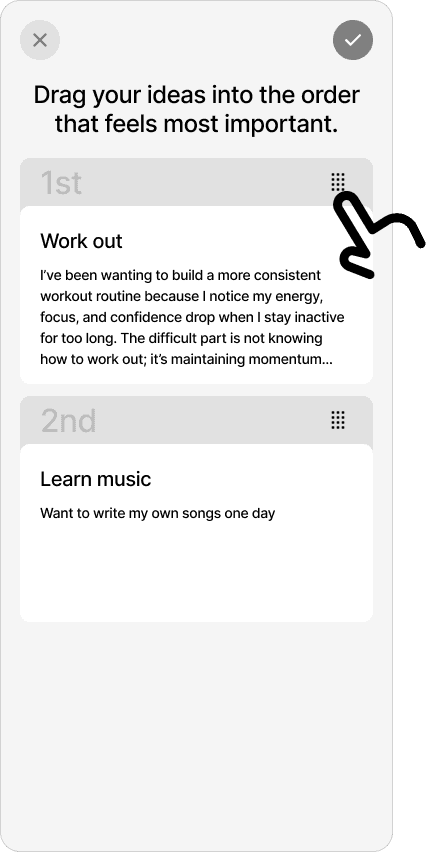
Set Capacity
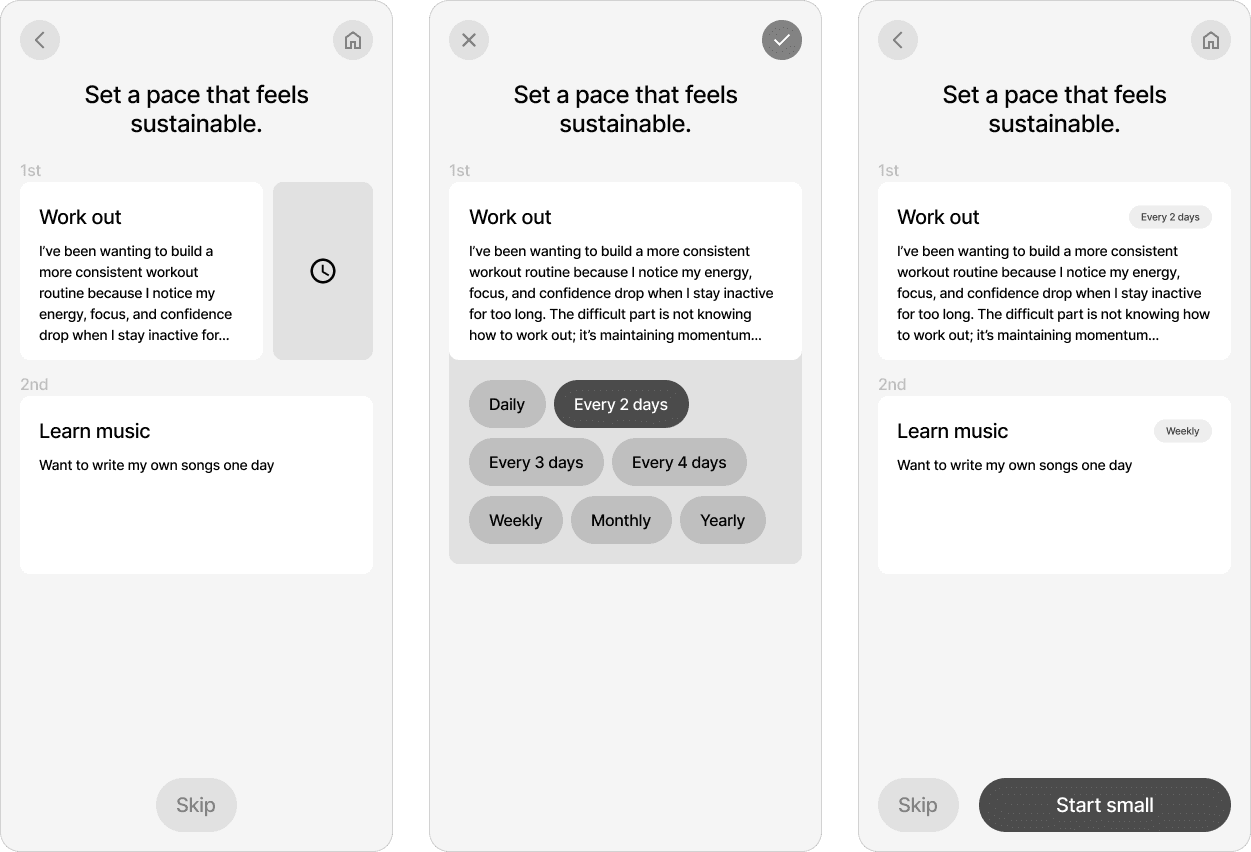
Make Long-Term Commitment

Context
Began with a simple premise: time and attention are non-renewable resources.
By studying how people manage personal goals, ideas, and daily priorities, I saw an opportunity to design a product that not only organizes tasks, but helps users reclaim the time and mental energy lost to repeated planning and decision-making.
Design Principles
Time is limited
Help users make intentional trade-offs between broad exploration and focused execution.
Progress should compound
Guide users toward ideas that can build on each other, instead of constantly restarting at the beginner level.
Niche creates leverage
Support users in turning multiple interests into a focused direction with long-term personal and professional value.
Challenge
How might we reduce the anxiety and guilt of having too many interests by helping users make clearer decisions about what to pursue next?


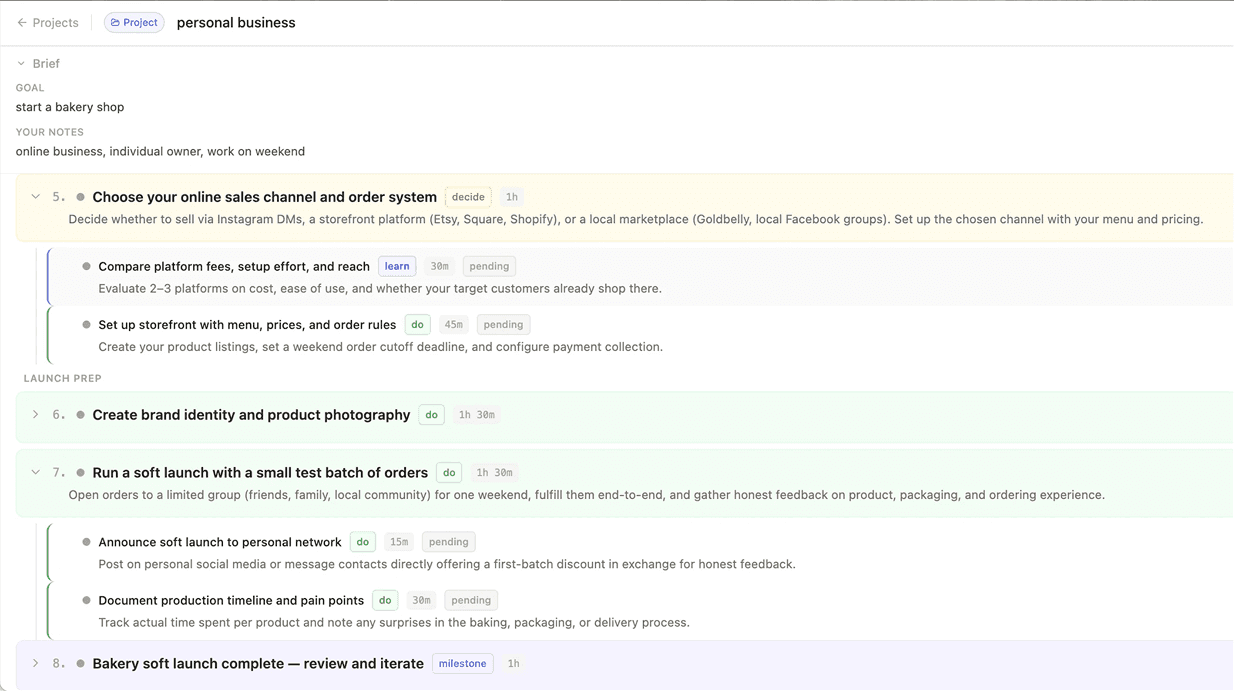
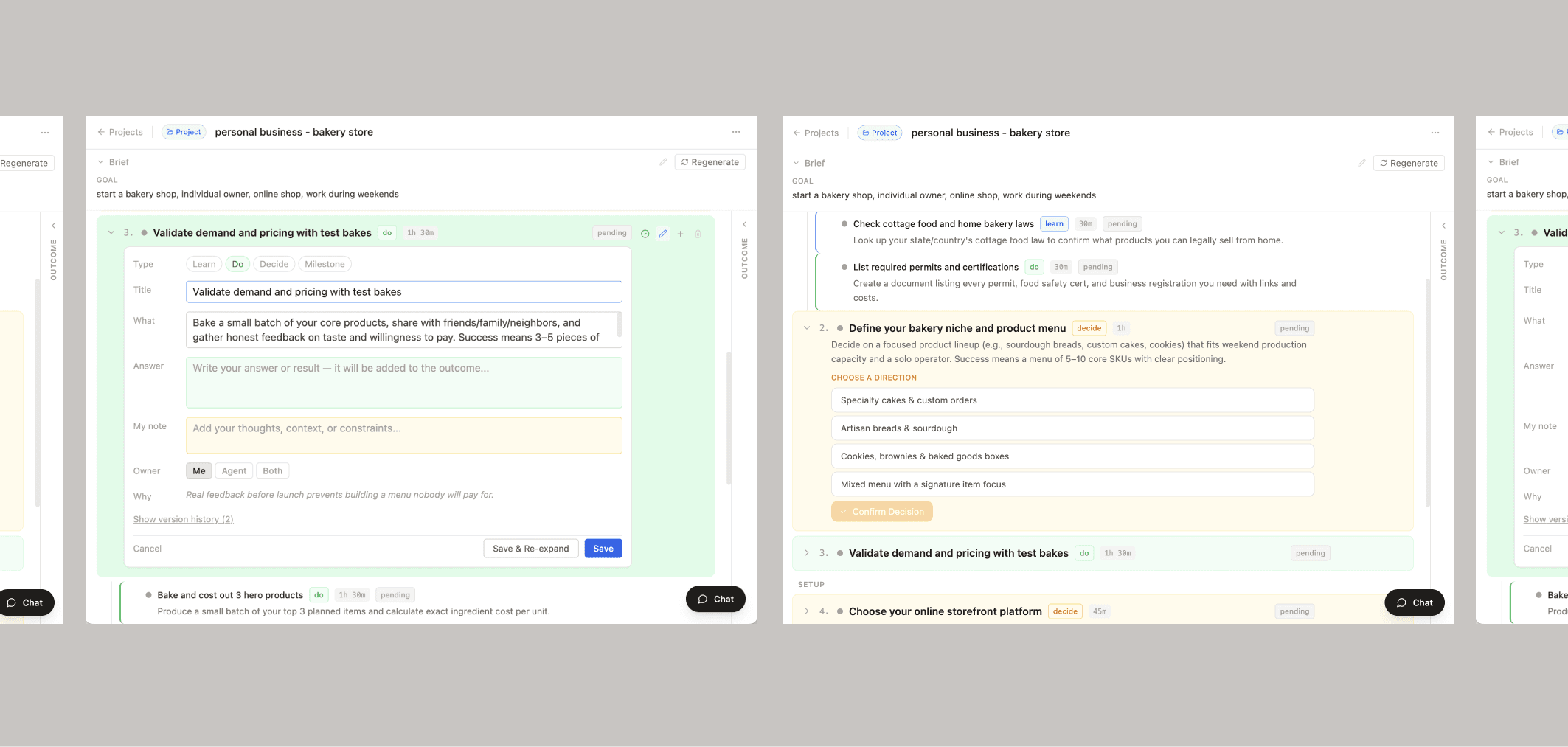
Initial Experiment with Claude Code
Defined system logic and task structure
Used Claude Code to generate functional flows
Iterated directly through making, not just designing
Reflection on AI workflow
Claude Code accelerated my process from design concepts to functional prototypes, making it easier to test realistic interactions and reduce friction between design and development handoff.
However, I also realized that speed alone does not create better products. Without a clear design strategy and intentional decision-making behind each interaction, a functional prototype can still fail to address the user’s real pain points.
Therefore, I decided to put this AI prototype at the side and restarted from the foundation, researching and understanding the users.
Research Findings
1. Broad curiosity creates cognitive overload
Each new interest demands a different way of thinking, which can lead to shallow processing across many areas instead of meaningful progress in one.
Multi-passionates may start a book, course, project, or new skill with strong initial motivation, but struggle to sustain the depth required to finish. While this makes them highly associative and creative, it also creates constant cognitive switching.
Design implication
Stride should help users externalize their ideas, reduce mental switching, and make their active priorities visible instead of forcing them to hold everything in their head.
2. Too many possibilities make execution harder
The key friction is not idea generation, but decide what to do first. Because every option feels valuable, they may avoid choosing altogether. Users need help deciding what deserves attention now, and what small action can create momentum.
Design implication
Stride should separate active ideas from backlog ideas, guide prioritization, and turn selected interests into concrete next steps.
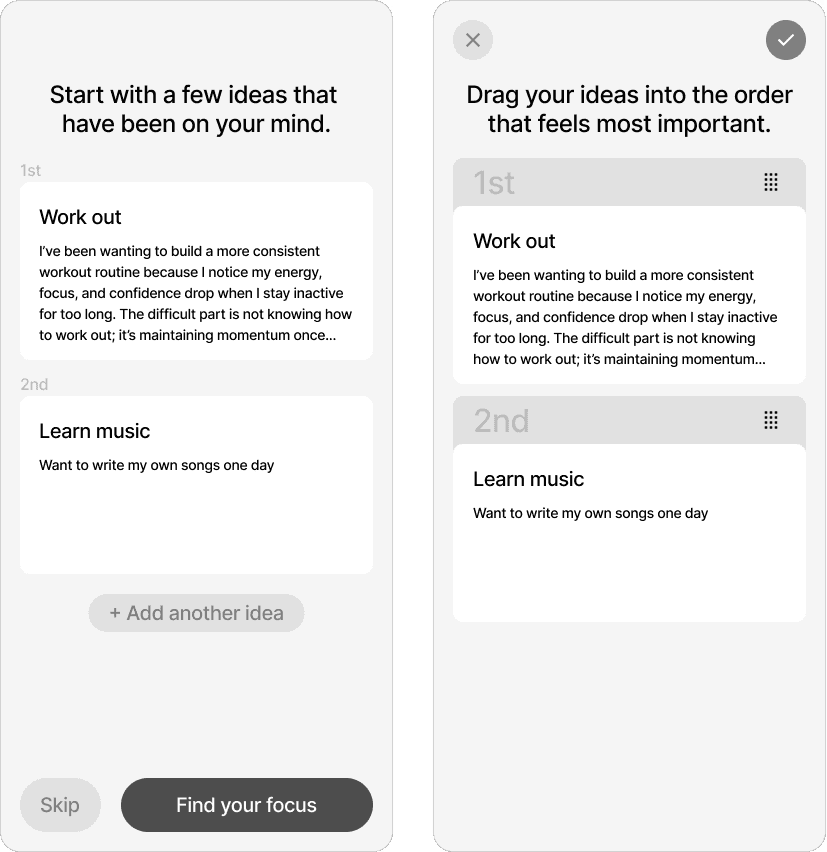
3. Unfinished projects create anxiety and low accomplishment
Many users experience a cycle of excitement, overcommitment, stalled progress, and guilt. Over time, unfinished ideas become a source of stress rather than inspiration.
Design implication
Stride should reduce repeated planning effort, break work into manageable actions, and help users experience small wins before motivation fades.
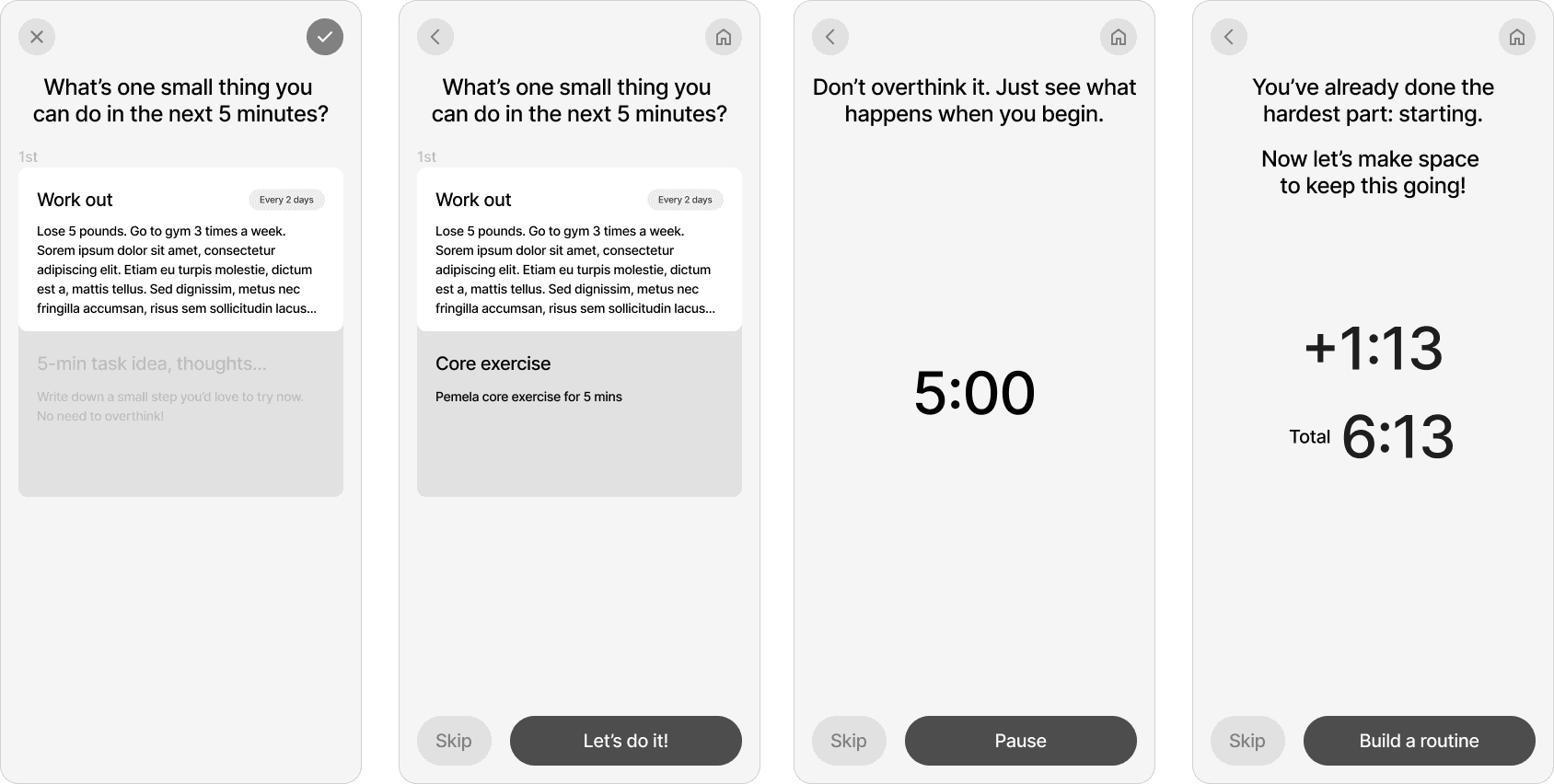
4. Specialization-driven environments make users question their identity
The emotional pain is not only productivity-related. It is also about identity, belonging, and the pressure to become one type of expert.
Design implication
Stride should support users in turning multiple interests into a coherent direction, helping them build depth and leverage without abandoning their multidimensional identity.
Strengths to Design For
The research also revealed that multi-passionate users have clear strengths:
They are driven by learning, highly creative, adaptable, and able to connect ideas across domains quickly. These qualities are not problems to fix. They are strengths that need better structure.
How might we design a system that protects broad curiosity while helping users prioritize, commit, and make progress that compounds over time?
Prototype
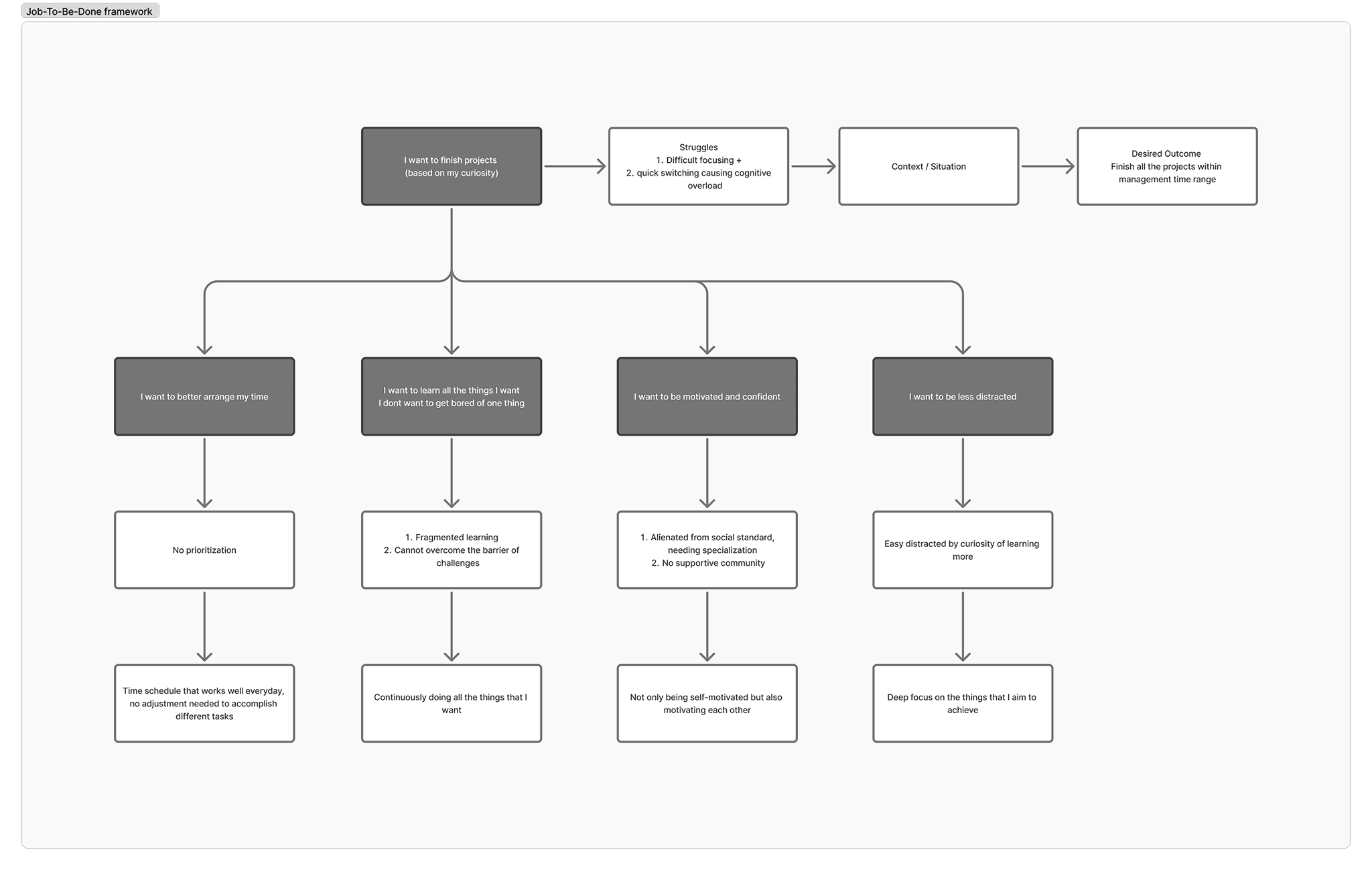
Job-To-Be-Done Framework
By mapping each desired outcome to its underlying struggles and contexts, I was able to identify which pain points were primary versus secondary.
The framework also clarified that users were not only seeking productivity, but reassurance, confidence, and sustainable engagement with their interests.
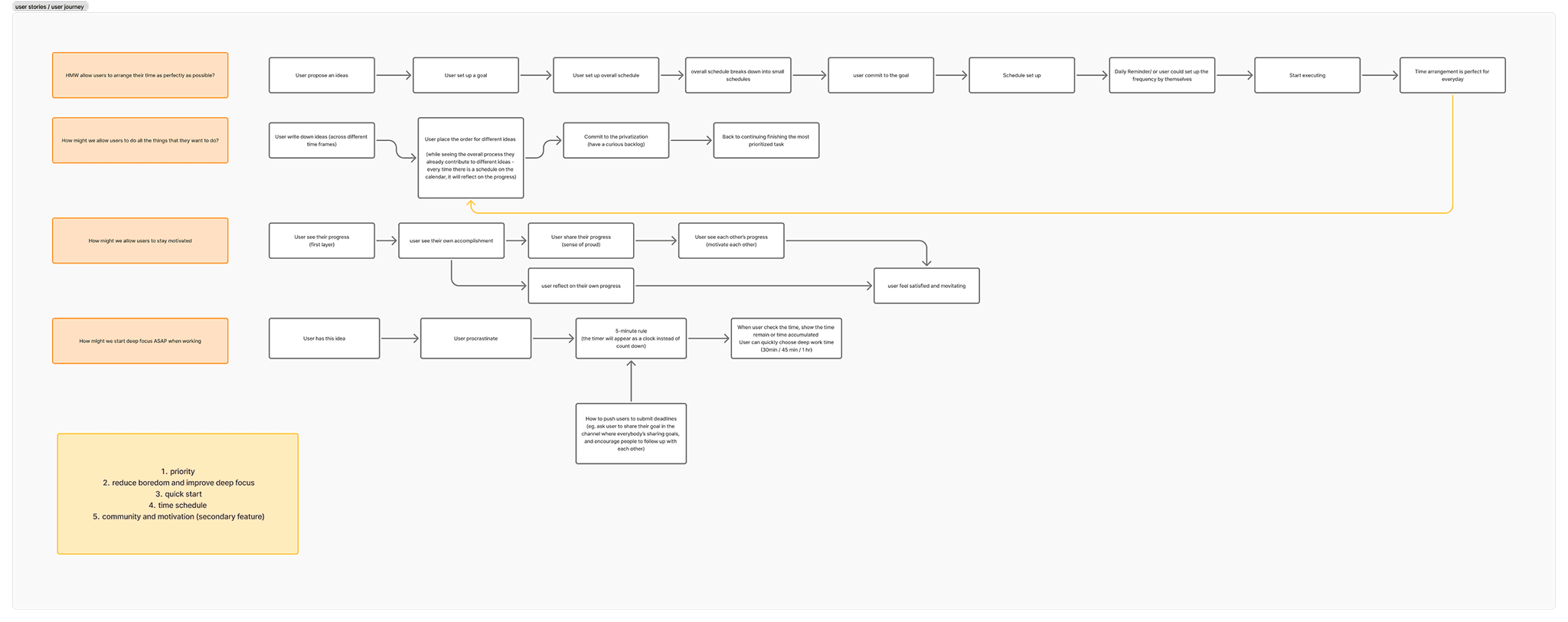
User Story / User Journey
Iterated twice on the user journey based on key pain points and insights from the Job-To-Be-Done framework, exploring how the product could guide users through different touchpoints and interactions to help them move from scattered ideas to focused, achievable action.
User Flow
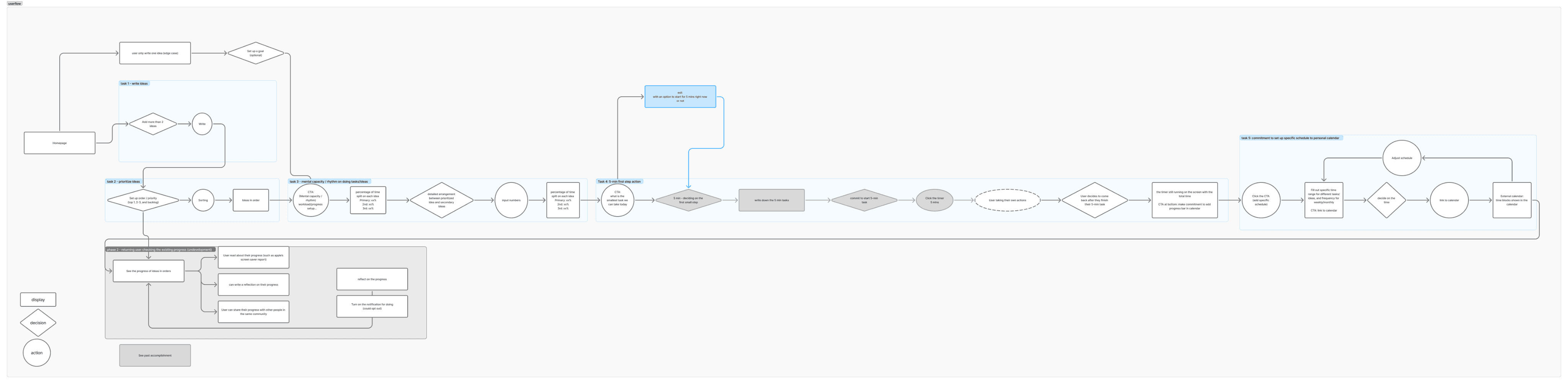
Then translated these insights into a detailed user flow including five linear tasks. The flow explored when the experience should actively guide users through structured interactions versus when it should intentionally pause and give users space to make decisions independently.
I mapped the logical relationships between pages, decision points, and system feedback states to ensure the experience felt supportive without becoming overly controlling.
The process also included identifying edge cases, such as users with only one idea, users abandoning tasks midway, or rapidly switching interests, to design fallback paths that maintain momentum while reducing decision paralysis.
Wireframe
Transform user flow into wireframe for more detailed interaction patterns.

Mid-Fi to High-Fi
By building design system, and iterating prototypes with more refined interaction patterns, Stride is approaching Hi-Fi versions and ready for user testing.

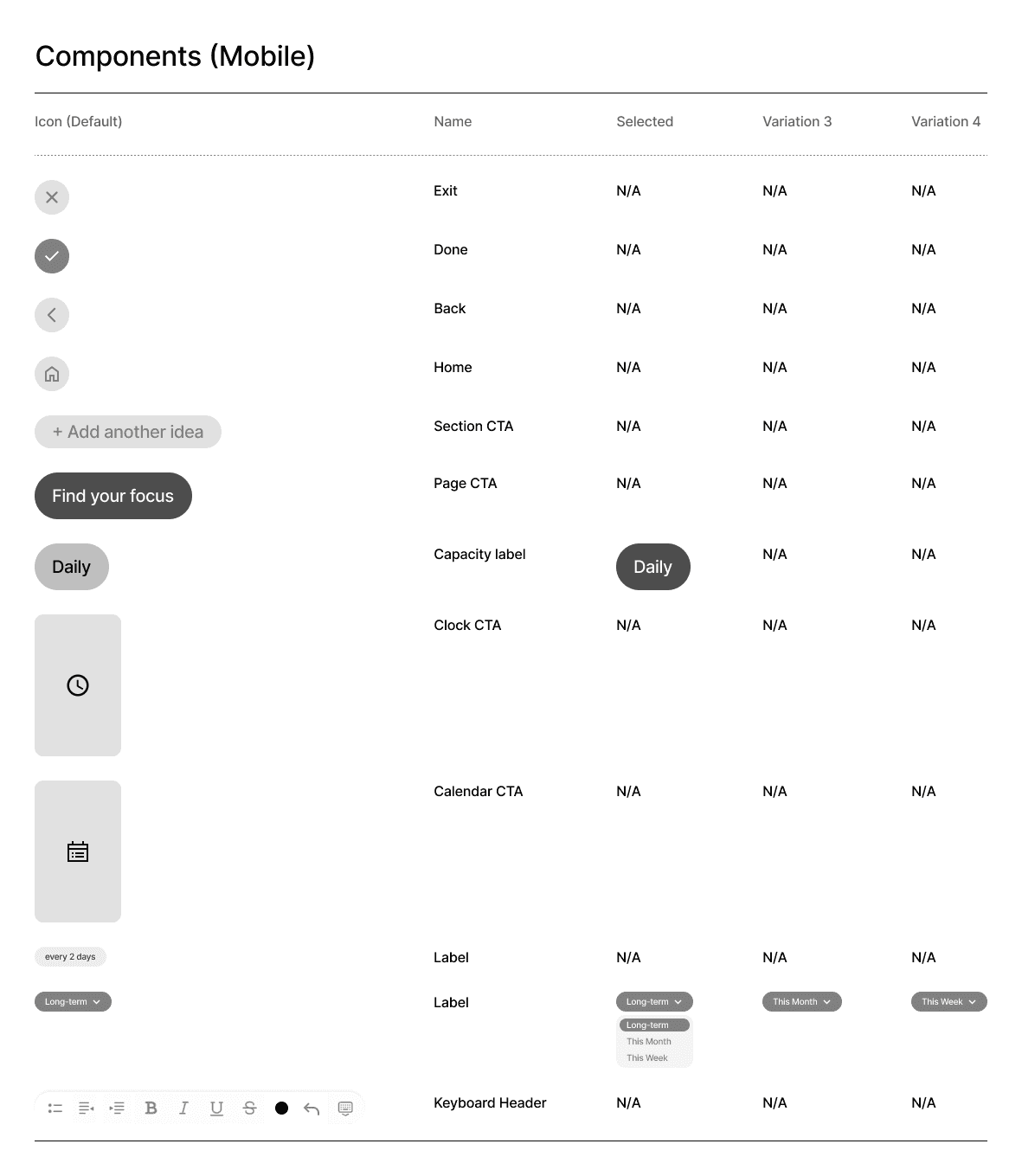
Design system
Interactions
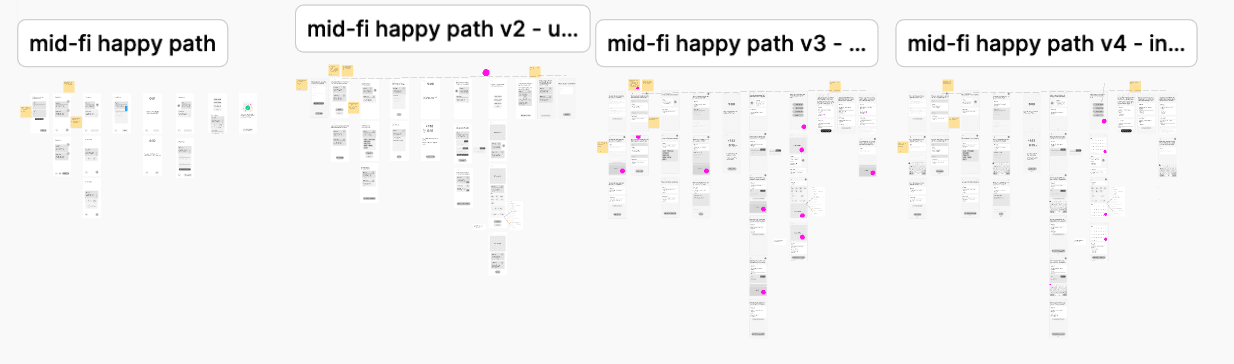
Prototype Iterations
Prototype with AI, Figma Make
Figma Make is helpful for creating a functional prototype that allow user testing to be more natural experience instead of a Woz experience, allowing me to observe and gather more detailed feedback.
Primary Issues from User Testing
Timer transition feels too sudden
Area: Timer page
Users felt the shift into the timer experience happened too abruptly.
Design implication: Add a bridge screen, micro-transition, or confirmation moment before starting the timer.
Swipe-and-hold interaction does not match user mental model
Area: Set Capacity page
The current swipe-and-hold interaction was not intuitive. Users preferred actions to be shown directly within the section.
Design implication: Make key actions visible and accessible without relying on hidden gestures.
Users want suggestions, not only self-generated ideas
Area: 5-min tasks page
Some users may not want to come up with ideas entirely by themselves. They expect the product to provide prompts or recommendations.
Design implication: Add guided suggestions or AI-generated prompts to reduce blank-page friction.
Design Iterations
User testing revealed the need to reduce friction at key commitment moments, leading to clearer CTAs, and guided suggestions that help users move from scattered ideas to action with more confidence.
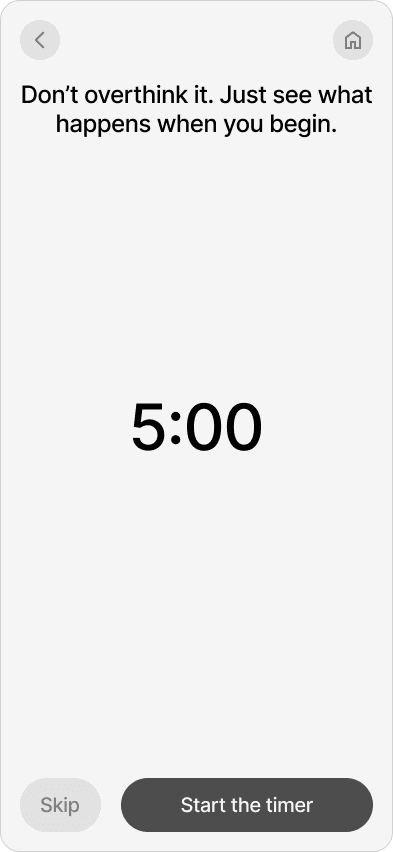
Timer transition allows user to prepare for it first
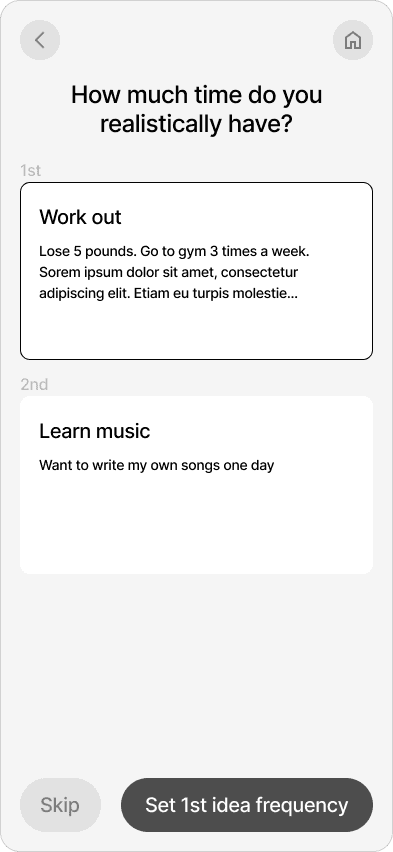
Swipe interaction is replaced by a direct CTA button

Provide suggestions instead of only self-initiated ideas
Reflection
AI tools can accelerate the product design process, but they do not change the core responsibility of understanding user pain points. Fast shipping matters, but speed should not come from compressing research or weakening design strategy. Instead, AI is most valuable when it reduces the time between design intent and functional execution, helping me move faster from concepts to prototypes, testing, and engineering handoff while keeping user insight at the center of every decision.